Technology
Plain radio, explained plainly.
Four engineering decisions, what they are meant to do, and why. This is the design, not a shipped product: nothing here has been measured on a finished unit yet.
Mesh
Every helmet relays for the others.
On the Pro and Carbon tiers, each unit passes voice and data along for the rest of the group. One rider's radio only needs to reach the next rider, so the group as a whole reaches much farther than any single unit could alone.
That is why the targets read the way they do: 800 m from one rider to the next, but 5 km across a full group of up to 15 riders, with 4 talking at once.
Voice
Voice gets its own radio link.
Live conversation needs low delay, so voice runs on a dedicated real-time radio link between helmets. It is never routed through the messaging network. The target is 100 ms or less from mouth to ear across the group.
The Basic tier does it differently: voice goes through your phone, so it needs cell coverage.
Open network
Messages that wait, then deliver.
Everything except live voice is designed to ride on Reticulum, an open-source network built for sometimes-connected links: group membership, text messages, rider locations and crash alerts. If a rider drops out of range, traffic waits and delivers when they come back. Nothing is lost because someone fell behind at a light.
The plan is for the headset itself to be a full Reticulum node, so the network keeps working when a phone is asleep or dead. The phone adds GPS, the screen and internet. Crash alerts show their status: sending, queued, delivered, acknowledged. On the Basic tier, Reticulum runs on the phone only.
We did not invent this layer; we build on it. Credit where it is due: reticulum.network. Whether the headset chip can run it alongside audio is one of the first things we are testing.
Hardware
Why the antenna sits in the nose.
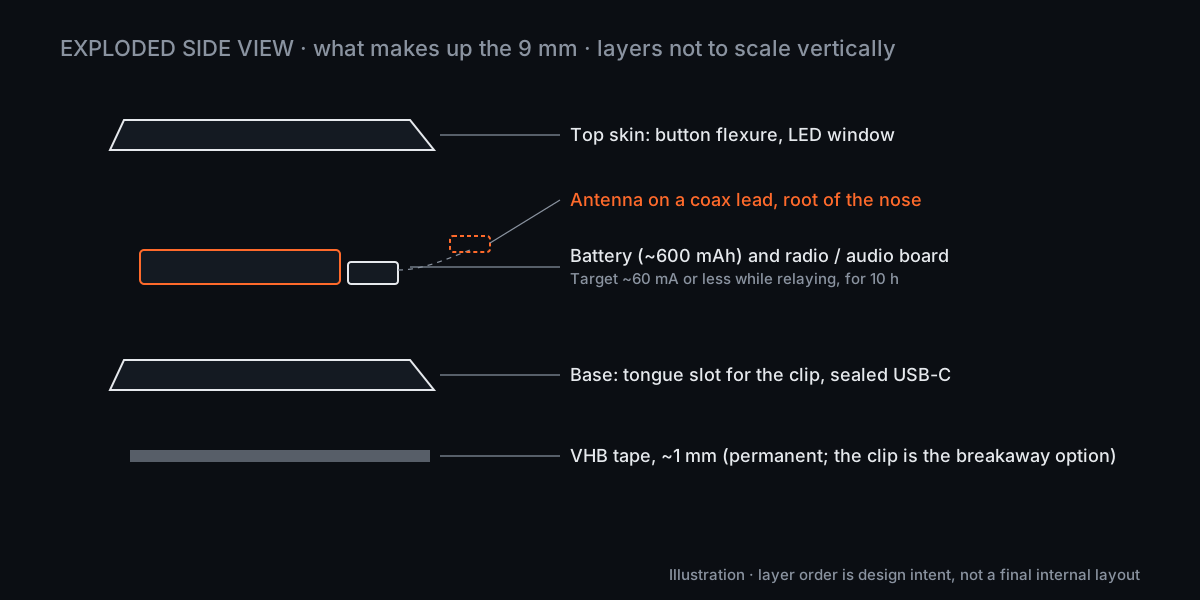
Radio hates obstructions, and the two biggest near a helmet intercom are the helmet shell and your head. The antenna goes in the nose of the unit, at the root and high under the top surface, away from both. The very tip is not used: it sits barely a millimetre from the shell.
The nose stays plain plastic on every tier, including Carbon, because carbon fibre blocks radio. A carbon look is a finish, kept away from the antenna.